


The strict precision requirements in additive production place significant demands on feeding systems. Recently, we at LIAD Smart completed the design and manufacturing of a complex, multi-channel feeding system for an additive producer in Germany. Built to feed a new twin-screw extrusion line, this project demonstrates how thoughtful engineering integration enables the dynamic and accurate management of 11 different raw materials simultaneously.
While this level of compounding capability was previously relevant mainly to additive manufacturers themselves, industry needs are shifting. Today, the complexity of formulas and the integration of challenging materials, such as powders, into standard processing lines make this technology relevant for many manufacturers looking to improve their product formulations.
The customer, who acquired a new compounding line for the production of UV and anti-static additives, needed to feed 11 different ingredients into the screws: five granular materials and six types of powders. The extruder structure includes three dedicated feed inlets: the first for granules, and the second and third for powders.
Given the multiple dosing channels and the limited space in the feeding zone, a creative structural solution was required. We designed a two-level service gallery positioned above the extruder. The upper level manages the granular materials, while the lower level handles the powders.
Our system connects continuously to the extruder’s starve feeders, maintaining a strict material distribution: four powders are fed into the second inlet, two powders into the third, and the five granular materials go through the first inlet. This separation allows for formulation flexibility while ensuring a consistent compounding process.
To meet the customer’s accuracy requirements, we integrated two of our core technologies, each tailored to handle specific material characteristics:
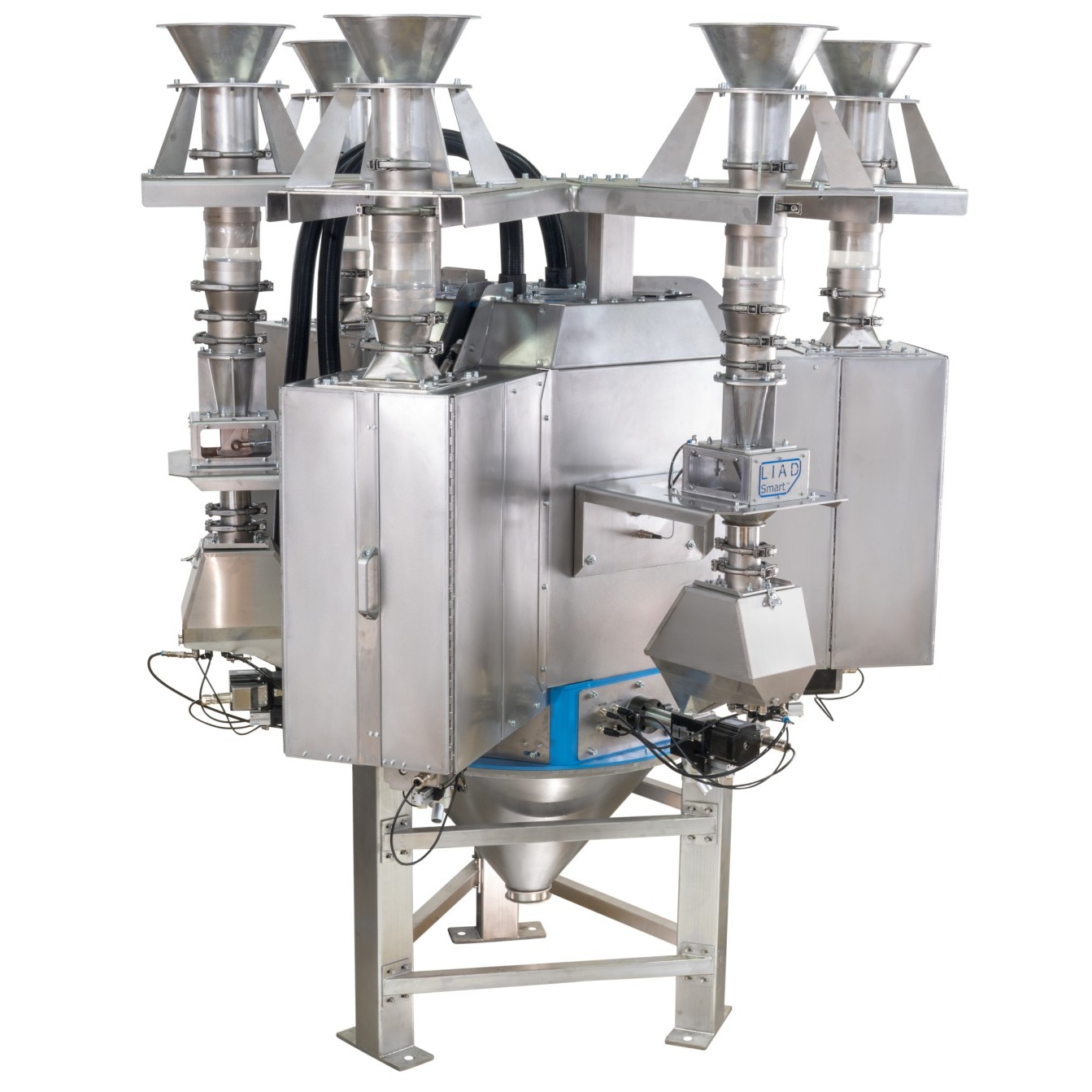 FlowSave for Granular Materials
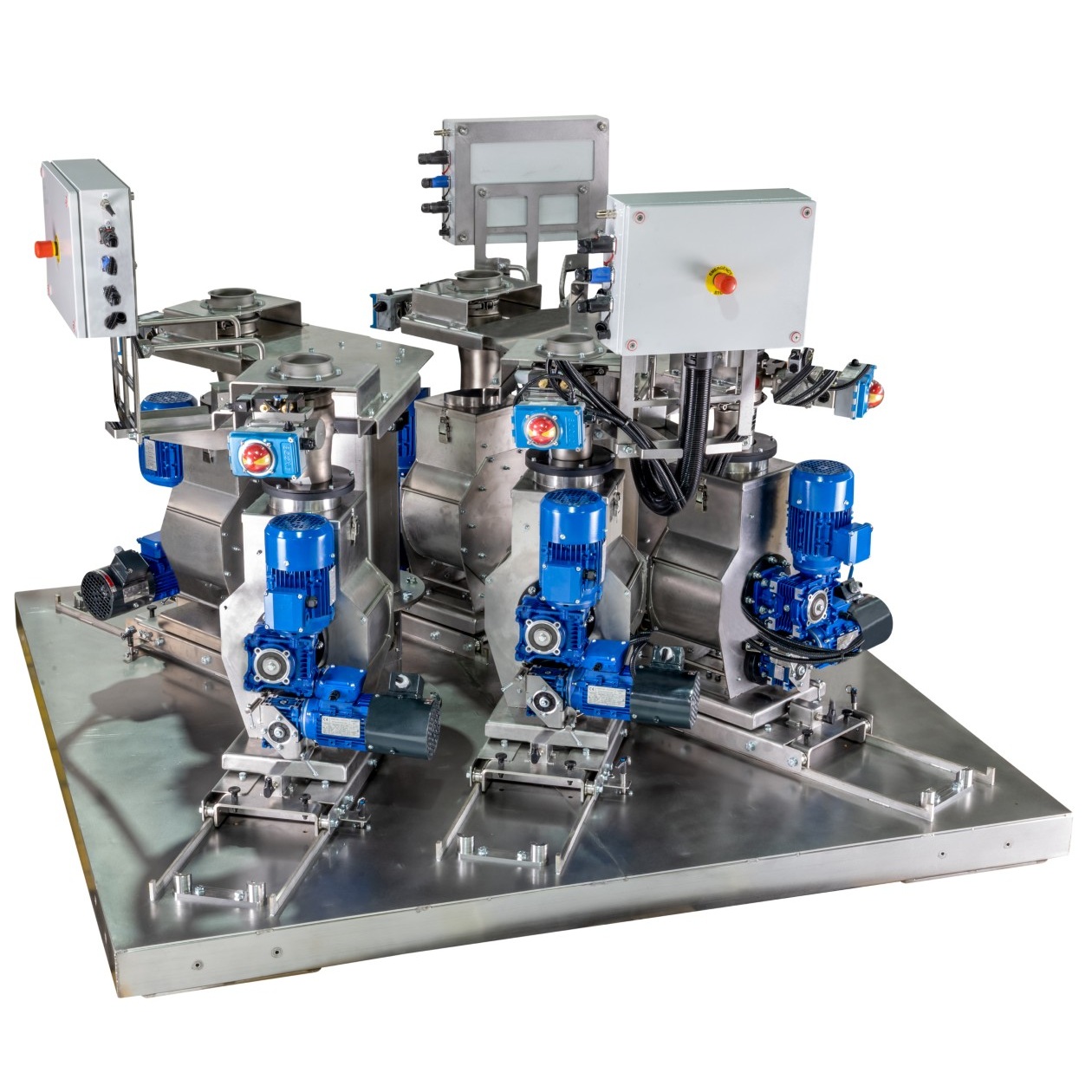 PowderSave for Challenging Powders
The combination of the tiered structural layout and the accurate feeding systems gives the client full control over their additive composition. By separating the management of powders and granules into dedicated channels, we prevent unwanted interactions between the raw materials before the processing stage, which improves the homogeneity of the final product.
This system reflects the modern standard in the polymer industry: a transition toward full automation and multi-channel management based on dynamic weighing. It is designed to support complex manufacturing formulas not only for additive producers, but across the wider plastics industry.
For us at LIAD Smart, this project serves as another practical example of adapting complex feeding solutions to unique production infrastructures, ensuring high precision for industrial compounding processes.
Converse diretamente com nossos especialistas e descubra maneiras de economizar custos, estoque e tempo.
Solicitar Demonstração© Copyright Ampacet Corporation. All Rights Reserved

